
Ukraine is freezing
I heard from two women in Kyiv about how they are coping with the blackouts

On 30 December, my radiators stopped working. Something going wrong with my boiler is an annual event; last Christmas I had no hot water. My flat was freezing and, after spending ages on the phone troubleshooting with an engineer, I had to call an electrician who had no availability until 2 January. But I could go to the supermarket and buy an electric heater. I could put my oven on and cook a delicious bit of roast beef. To be honest, by the evening, my flat was the warmest it had ever been.
My brief encounter with no heating for one whole morning made me think about what is happening in Ukraine right now. Repeated attacks on energy infrastructure by Russia means that people are going for long stretches of time with no power. No heating, no light, no internet. And while the last few winters of the full-scale invasion have been unseasonably warm, this winter the temperatures are as low as -20 C.
When I was in Ukraine in November, the cold was already starting to bite, although the thermometers never dropped below zero. Even so, if you were having a meeting in a room with no power, you felt it. Thankfully my hotel had a generator. The loud beep that signalled one power supply switching to another would wake me up, but at least I was warm. I had meetings where I’d keep my coat and gloves on, drank beers to candle light because the lights had gone off, and felt grateful for the rush of warm air when walking into a cafe powered by generators, as my glasses steamed up with the embracing heat. At that point, the power cuts would last five hours. Now the weather is colder, and the black outs are far, far longer.
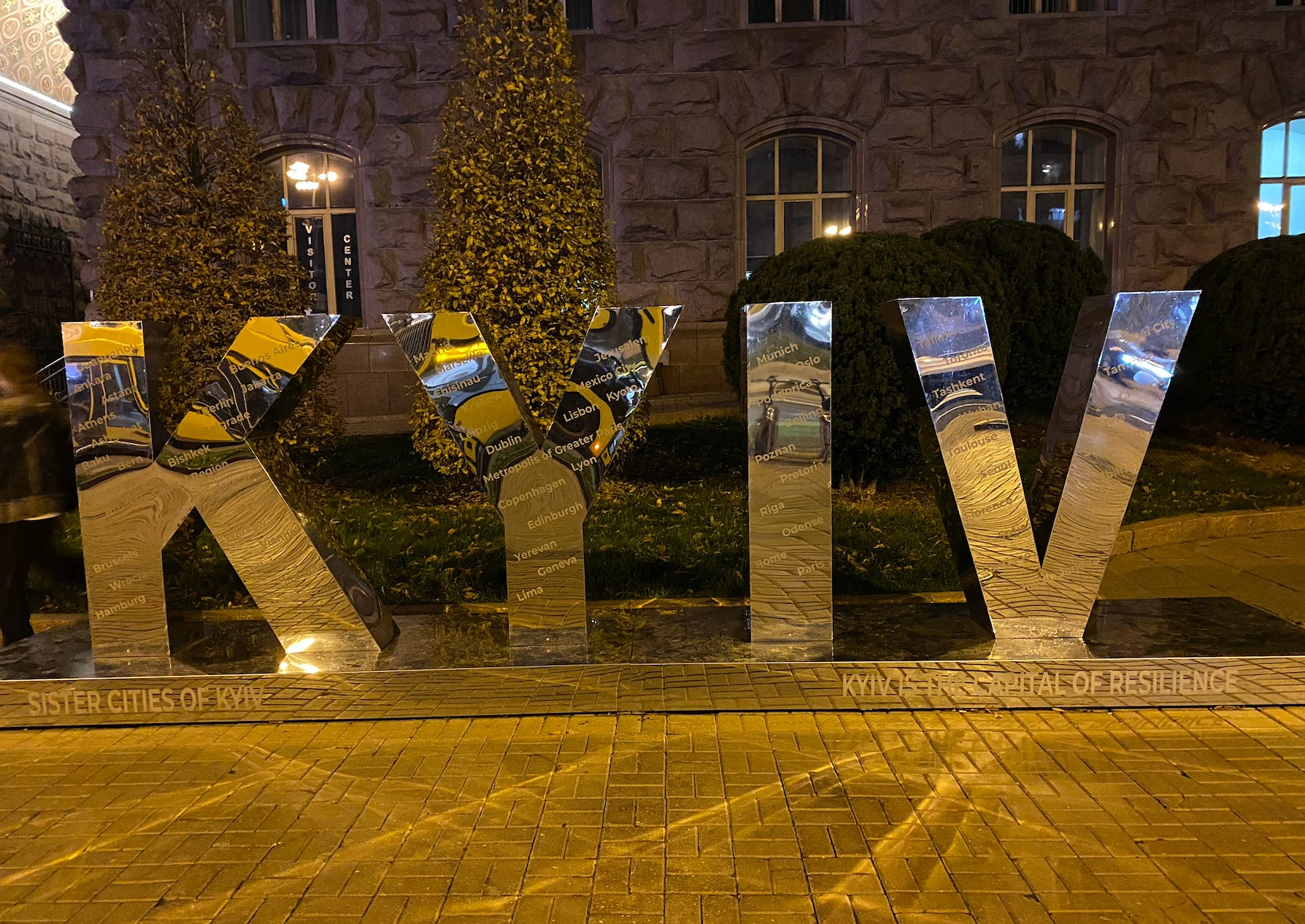
I can’t go to Ukraine right now, but to find out how people are coping as Russia weaponises winter I reached out to my friends Anna and Svitlana in Kyiv.
“Living in Kyiv during blackouts and without heating is very intense and deeply touching,” said Anna. “Outside, it is minus 17°C at night and no warmer than minus 10°C during the day — and it has been like this for the past week.
“Around 100 apartment buildings are still without heating following last Friday’s attack on heating and energy infrastructure. I am among the lucky ones: I do have electricity at home, but only for 4–6 hours a day, usually at night — from around midnight until 6 a.m.”
Last Friday’s attack left 70% of Kyiv without power for several hours. Four people were killed and another 25 injured. Energy and residential facilities were also damaged in western Lviv region, with Russia firing an intermediate-range ballistic missile known as “Oreshnik”.
When we swap WhatsApp messages, Svitlana told me she had no power in her apartment for two days. “Many residential buildings in Kyiv have it much worse, approaching one full week, and often without heating either,” she said. “Multi-apartment buildings turn into cold concrete boxes in this weather.”
“The situation in Kyiv is very bad amid the coldest winter of the past five years,” she added. “Russia damaged every non-nuclear power station in Ukraine precisely at a time when temperatures dropped below -15 Celsius.”
On Thursday, President Zelenskyy declared a state of emergency due to the ongoing energy crisis, accusing Russia of exploiting the harsh winter conditions as part of its war strategy. He spoke of how the attacks are now so frequent that there is no time to recover.
Data tells some of the story. As a result of the Russian attacks, Ukraine’s available generating capacity has fallen from 33.7 GW at the start of the full‑scale invasion to about 14 GW as of January 2026, according to The Economist. Right now, the country can only meet 60% of its electricity needs. Russia has attacked every power plant in Ukraine, with 612 strikes on energy infrastructure since 2022, according to a speech by Ukrainian Energy Minister Denys Shmyhal yesterday (16 January).
But numbers can’t tell us how it feels to be cold, to be in the dark, to feel cut off from the world.
“Hot food, tea, and a shower have become a luxury,” said Anna. “But we are adapting. Just imagine: around 3.5 million people are struggling without proper heating and a lack of electricity. Many of us have temperatures of around 15°C at home or at work. We wear many layers of clothing, sleep under piles of blankets, and work from cafés when we can — because they have generators.”
Like Ukrainians have done throughout the full-scale invasion, they are finding ways to adapt, to survive, and to remain resilient.
“I knew that this winter would be tough and prepared as best I could,” said Svitlana. “I sought out an apartment to rent with a gas stove. The gas stove is my saviour, allowing me to cook warm meals and warm up water for basic hygiene. I have a portable charging station - an EcoFlow river 2 - allowing me to stay connected.” That mobile connection helps us outside of Ukraine to learn what is going on, as Svitlana tells her experience of this war on her Substack.
It is not only Kyiv which is affected. On Thursday, Russian forces attacked a large-scale energy facility in Kharkiv. International figures have condemned the assault on Ukraine’s energy infrastructure and the terrible human suffering it is causing, with the European commissioner for human rights, Commissioner O’Flaherty calling for an immediate halt to the attacks and saying:
“The humanitarian consequences of prolonged power outages are grave. Across Ukraine, access to basic utilities is being severed: access to heating and water supply is interrupted, and the ability of hospitals and healthcare facilities to function is under threat. The loss of access to communication and electricity-powered public transport isolates people and disrupts their daily lives. Together, these conditions place an immense strain on the physical and mental health, dignity and safety of the Ukrainian people.
I commend the Ukrainian authorities and emergency services for their tireless efforts to restore the conditions necessary for civilian life.”
Russia’s intention with its attacks on energy infrastructure is three-fold: to punish Ukrainians for their brave resistance against Russia’s violence, to try and break Ukrainian morale, and to cause loss of life.
It believes a cold and exhausted population will capitulate. The attacks on the Nova Poshta depot in Kharkiv, and its attacks on the rail infrastructure and trains are another example of how attacking infrastructure is an attack on morale. Ukraine is proud of how its trains continue to run on time and how it is still delivering post, helping people have a bit of normality, a bit of luxury, a bit of human connection, in the most desperate of times. Breaking power plants, public services, and rail tracks will, Russia hopes, break the people.
With Anna and Svitlana, however, that plan is not working. Both spoke of how despite the very real challenges, the blackouts are leading to society reaching out to care for one another, and connect with those who are also struggling.
“We are angry, tired, and cold, but I am sure all of us are ready to go through this,” said Anna. “We talk to friends more, check in on each other, and ask how we can help. We know it won’t get better soon, but we are ready to face it together, despite everything.”
Svitlana also mentioned the importance of spending time with other people “I spend as much time as I can with friends and loved ones,” she said. “The building I live in fortunately wasn’t cut off from heating, although the system is barely warm. Considering everything, I’m fine.”
The great fear is how weaponising winter will lead to loss of life. People die in the cold. When Anna and I went to Izium in 2023, she told me at the mass grave site that yes, many of those buried here were killed, but others died because they had no medical care, no food, no warmth. We saw the braziers on the street where people made makeshift fires in the harsh Ukraine winter to try and keep warm. We probably won’t know how many people will die as a result of the cold during the blackouts, but cold weather impacts the health and lives of the vulnerable, particularly older people.
This was raised by Commissioner O’Flaherty, who wanted to “draw particular attention to the plight of those most at risk, including older persons, people with disabilities, the sick and families with children, who are facing life-threatening risks due to exposure to extreme cold in a dire humanitarian context.”
No one can ignore or deny how difficult and distressing life is when there is no power and the temperatures outside are plummeting. But as is so often the case when you talk to Ukrainian people about their experiences of the full-scale invasion, Anna’s and Svitlana’s thoughts are for the soldiers and emergency workers who are facing even more dire conditions.
“We are not in the trenches like our soldiers,” said Anna. “We are struggling — but it is not breaking us. It is making us more united, stronger, and kinder to one another.”
“Think about the municipal service workers toiling around the clock in this weather to fix burst pipes.” said Svitlana. “Think about Ukraine’s Defence Forces braving the cold in the trenches. I’ll get through this.”
While people struggle to keep warm and maintain morale in the darkness, the geopolitical wrangling over Ukraine’s future rumbles on. Trump said this week that Ukraine was blocking peace – telling Reuters during an interview that, in regards to Putin, “I think he’s ready to make a deal. I think Ukraine is less ready to make a deal.”
Asked why his peacemaking efforts had not yet resolved the big war, which is nearing its four-year anniversary, Trump responded: “Zelenskyy”.
It’s like being stuck in the worst kind of groundhog day. You have a day when Trump criticises Putin and then he goes back to his preferred position: that Zelenskyy and Ukraine are the ones to blame for the conflict continuing.
No one wants peace more than Ukraine. It is Ukraine that is freezing, it is Ukrainian civilians like Anna and Svitlana who wake up every day to more hours of cold and darkness. It is Putin who is refusing to shift from his maximalist demands that not only force millions of people to live through the horrors and violence of occupation, but does not guarantee Ukraine’s future security and threatens the future of European security. There can be no peace while Putin continues to pursue his mad imperialist ambition. The only ones blocking peace are the ones that throw drones and missiles at Ukrainian cities, night after night after night, day after day after day.
The UK is taking action. Both David Lammy and John Healey have braved the freezing conditions and visited Kyiv in the last week or so, with the UK announcing new emergency energy support of £20m for Ukraine in the wake of Zelenskyy declaring a state of emergency. The Guardian reports that “the British support includes funding aimed at keeping electricity and heating on in homes, hospitals and schools across winter.”
Yet opposition to UK support for Ukraine also rumbles away. Reform has said it would vote against any future peace-keeping force in the region, while the far right – which loves to wrap itself in a mirage of patriotism – said the same. People continue to criticise Starmer for focusing too much on international issues, as if what happens in Ukraine does not have a direct impact on the domestic situation here. And Putin’s useful idiots on both sides of the political spectrum demand an end to rearmament and military aid to Ukraine.
In the meantime, Ukraine struggles on in the cold and darkness. Now, just as in February 2022 and every day in between, the Ukrainian people need our solidarity and support.
“I hope that folks outside of Ukraine realise that this is not just another blackout,” said Svitlana. “It’s much much worse than what we had before.”
Obligatory book plug
You can buy Bodies Under Siege: how the far right attack on reproductive rights went global direct from Verso or from your usual booksellers.
What I’m loving
As we are talking about how cold it is in Ukraine, please read this article by Peter Beaumont reporting from Bucha.
‘An attempt to break people’: Bucha holds out amid Russia’s weaponisation of winter
I also want to share this read by Charlotte Higgins about Nova Poshta, so you can understand how attacks against the postal service are an attack on morale.
Next day delivery, no weapons allowed: the unstoppable postal service keeping Ukraine going
What I’m writing
Nothing yet… or at least, the drafts are written but they have not been filed!
What I’m reading
Having finished The Eighth Life, I am still on a Nino Haratischwili tip, reading My Soul Twin, translated by Charlotte Collins. Honestly, I was BEREFT when I finished The Eighth Life, it was such a gorgeous long read and you lived with those characters. My Soul Twin is very different to that and to The Lack Of Light but it’s really smart.
I’ve also been reading Agatha Christie: The Secret of Chimneys, and Murder is Easy, to be precise. It’s funny how different they are to the ITV adapts!
What I’m watching
I am OBSESSED with Younger, the most ridiculous US sit-com from SATC’s Darren Starr. What I enjoy most about it is how realistic its portrayal of the publishing industry is (this is a joke, to be clear). I am on Series 6 and I only started watching it last Friday. It’s an addiction.
I really didn’t enjoy The Beast in Me even though I watched to the end. I got frustrated with how utterly incompetent Claire Danes’ character is.
And I started The Mystery of the Seven Dials last night and not loving that either! OK so I know murder is serious and everything, but it’s such a fizzy novel with so much verve and pace, and watching it was rather lugubrious.
I watched The Post which was alright, quite compelling.
But the star of my TV watching had to be the 1984 film Amadeus. That’s an amazing movie isn’t it! Turns out it is as good as everyone says it is!
One more thing…
I keep this Substack free, because I don’t think I can justify charging a subscription when my posting is so sporadic.
But all my reporting on Ukraine and the wider security situation, as well as my thoughts on feminism and the far right, exists outside my day job.
If you value these insights and would like to contribute to my time, you can now leave me tips on Kofi.
That’s it for this week. Slava Ukraini!